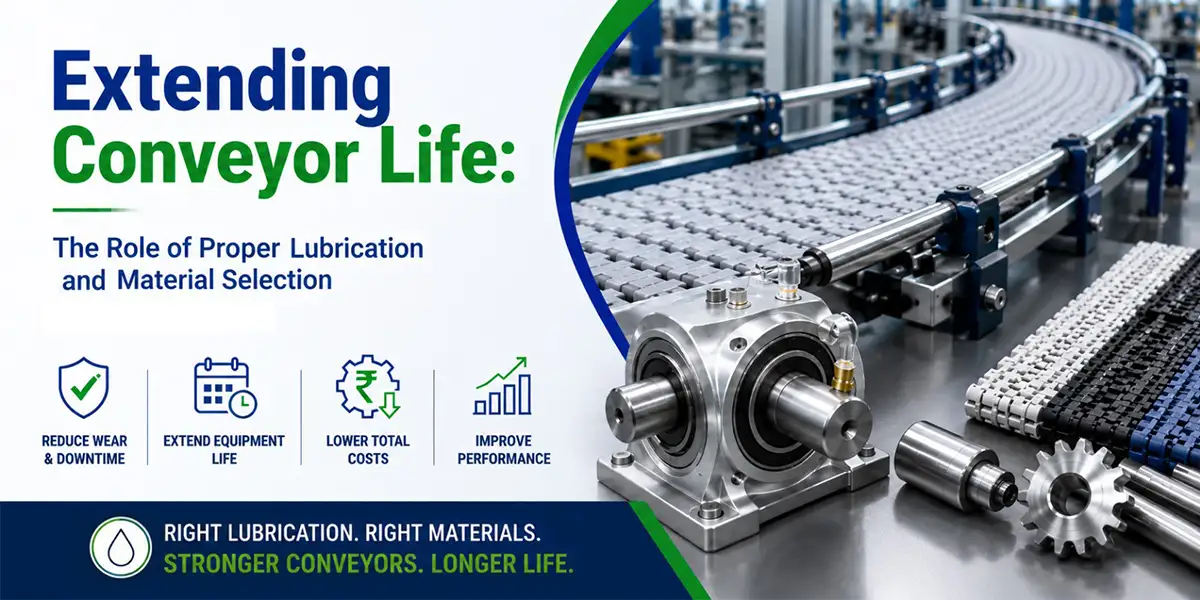
In high-throughput manufacturing environments, conveyors are expected to run continuously—often under demanding conditions like heat, moisture, chemicals, and heavy loads.
Yet, when conveyor systems fail prematurely, the root cause is rarely “usage.”
More often, it comes down to two overlooked factors:
👉 Improper lubrication
👉 Incorrect material selection
These two decisions alone can determine whether a conveyor lasts 2 years or 10+ years.
Why Conveyor Lifespan is a Strategic Metric
Extending conveyor life is not just about reducing replacement frequency. It directly impacts:
- Maintenance costs
- Production uptime
- Energy efficiency
- Hygiene and compliance (especially in food industries)
A longer-lasting conveyor system means predictable operations and lower total cost of ownership.
Part 1: The Role of Lubrication in Conveyor Performance
Why Lubrication Matters
Friction is the biggest enemy of any moving system.
Without proper lubrication:
- Wear accelerates
- Heat builds up
- Components degrade faster
This is especially critical in:
- Chains and sprockets
- Bearings and moving joints
- High-speed conveyor lines
Common Lubrication Mistakes in Indian Plants
1. Over-Lubrication
More is not better.
Excess lubrication:
- Attracts dust and debris
- Creates sticky residues
- Increases wear instead of reducing it
2. Using the Wrong Lubricant
Different applications require different lubrication types:
- Food-grade lubricants for F&B industry
- High-temperature lubricants for heat-intensive environments
- Water-resistant lubricants for washdown areas
Using a generic lubricant often leads to faster degradation.
3. Inconsistent Lubrication Schedules
Irregular lubrication leads to:
- Uneven wear
- Sudden component failure
Consistency is more important than frequency.
When Lubrication Can Be Reduced (or Eliminated)
Modern conveyor systems are evolving.
For example:
- Thermoplastic slat chains and modular belts are designed for low-friction operation
- These systems often require minimal or no lubrication, especially in clean environments
They offer:
- Smooth and quiet running
- Reduced maintenance
- Lower contamination risks
This makes them ideal for industries like food, beverages, and pharmaceuticals.
Part 2: Material Selection – The Foundation of Conveyor Life
If lubrication is about reducing friction,
👉 Material selection is about resisting it altogether.
Choosing the Right Material: What Matters?
1. Temperature Resistance
Different materials behave differently under temperature:
- PP (Polypropylene): Suitable for moderate temperatures
- HDPE: Works well in low-temperature environments
- Acetal: Ideal for higher loads and better strength
Using the wrong material leads to:
- Warping
- Brittleness
- Premature failure
2. Chemical Resistance
In industries like:
- Food processing
- Dairy
- Pharmaceuticals
Conveyors are exposed to:
- Cleaning chemicals
- Oils and acids
Materials must be chemically resistant to avoid degradation.
3. Load-Bearing Capacity
Heavy-duty applications require:
- High tensile strength
- Impact-resistant materials
For example, modular belts with reinforced designs provide better durability under load.
4. Friction Characteristics
Low-friction materials:
- Reduce energy consumption
- Improve system efficiency
- Minimize wear
Components like UHMWPE wearstrips and guides provide a low-friction surface for smoother conveyor movement.
The Link Between Material Selection & Maintenance
The right material doesn’t just improve durability—it reduces maintenance dependency.
For instance:
- Low-friction polymers reduce the need for lubrication
- Modular construction allows easy repair instead of full replacement
- Corrosion-resistant materials extend system life in harsh environments
Well-designed conveyor components are:
- Easier to clean
- Easier to maintain
- More reliable over time
Lubrication vs Material: Not Either-Or, But Both
A common misconception is choosing between lubrication and material selection.
In reality:
👉 They work together
- Good material reduces friction
- Proper lubrication minimizes residual wear
When both are optimized:
- Component life increases significantly
- Downtime reduces
- Performance stabilizes
Practical Strategies for Conveyor Lifespan Improvement
1. Match Material to Application
Avoid “one-size-fits-all” solutions. Choose based on:
- Industry
- Environment
- Load
- Temperature
2. Shift to Low-Maintenance Systems
Adopt:
- Modular belts
- Thermoplastic chains
These systems are:
- Easier to maintain
- More resistant to wear
- Less dependent on lubrication
3. Standardize Lubrication Practices
Create a lubrication protocol:
- Define lubricant types
- Set schedules
- Train maintenance teams
4. Monitor Wear Patterns
Regular inspection helps identify:
- Misalignment
- Friction hotspots
- Early-stage damage
5. Implement Preventive Maintenance
Routine checks and timely replacements ensure:
- Reduced unexpected failures
- Longer system life
Preventive maintenance helps detect and address issues before they escalate
The ROI of Getting It Right
When lubrication and material selection are optimized:
- Conveyor life increases significantly
- Maintenance costs reduce
- Energy efficiency improves
- Production becomes more predictable
This is not just maintenance—it’s cost optimization at a system level.
Conclusion
Extending conveyor life is not about reacting to failures—it’s about designing for longevity from the start.
Proper lubrication ensures smoother operation.
Right material selection ensures durability.
Together, they create conveyor systems that are:
- Reliable
- Efficient
- Built for long-term performance
At UCPL, the focus is on enabling industries to move from frequent repairs to long-term reliability, through the right combination of materials, engineering, and maintenance practices.
Because in modern manufacturing,
the longest-lasting system is the most cost-efficient one.